Carroll Sockwell (1943-1992)
Carroll Sockwell was born and raised in the Foggy Bottom neighborhood of Washington, D.C., in a crowded household shaped by both resilience and instability. His mother, Annie, worked as a housekeeper, while his father, Luther, was largely absent. After Annie was diagnosed with schizophrenia in 1948 and institutionalized for fifteen years, Sockwell and his siblings were raised primarily by their aunt, with the support of their maternal grandmother. Sockwell himself experienced early psychological struggles, including a brief hospitalization in childhood, but with the encouragement of social workers, he began to channel his energies into the arts, first through theater and music, and eventually painting.
At the age of fourteen, Sockwell enrolled at the Corcoran School of Art, marking a decisive turn toward a professional artistic path. Periods of psychiatric treatment continued into his adolescence, including time at St. Elizabeth’s Hospital, where he encountered pioneering art therapist Elinor Ulman, whose influence further reinforced the role of art in his life.
In 1959, Sockwell moved to New York, immersing himself in the city’s vibrant avant-garde scene. Frequenting the famed Cedar Bar, he encountered leading figures of Abstract Expressionism, including Barnett Newman and Willem de Kooning. Despite this proximity to influential circles, Sockwell later recalled the isolation he experienced as a Black artist in that milieu, noting that acceptance was difficult to attain.
Returning to Washington in 1963, Sockwell became part of a dynamic local art community. He formed connections with curator Walter Hopps and artists such as Gene Davis and Howard Mehring, situating his work within the orbit of the Washington Color School. While associated with that movement, his practice ultimately diverged toward a more restrained, contemplative abstraction. His paintings, reflect an aesthetic that bridges Color Field painting, the New York School, and a structural rigor reminiscent of Burgoyne Diller.
Sockwell briefly served as curator of the Barnett-Aden Gallery from 1965 to 1966, further embedding himself in Washington’s cultural fabric. By the late 1960s, he was exhibiting widely, organizing shows with Hopps and critic Gregory Battcock, and participating in major survey exhibitions such as Art in Washington. In 1969, he was included in a group exhibition at the Nordess Gallery in New York alongside prominent artists including Norman Lewis, Alma Thomas, Felrath Hines, and Charles McGee. A 1971 solo exhibition at Jefferson Place Gallery brought him critical acclaim, with favorable attention from both Jet magazine and The Washington Post.
Throughout the 1970s and 1980s, Sockwell maintained a steady artistic output and achieved periods of both critical recognition and financial stability. Yet his career was marked by personal volatility. Known for a mercurial temperament and struggles with alcoholism, he experienced cycles of success and hardship. In June 1992, a solo exhibition at the Washington Project for the Arts was met with strong critical praise, underscoring the enduring power of his work even as his personal circumstances deteriorated.
Later that year, in a tragic end that mirrored the turbulence of his life, Sockwell died by suicide, jumping from the Pennsylvania Avenue bridge in his native Foggy Bottom. His legacy endures through a body of work that, while often understated in palette, reveals a profound sensitivity to structure, tone, and the emotional depths of abstraction.
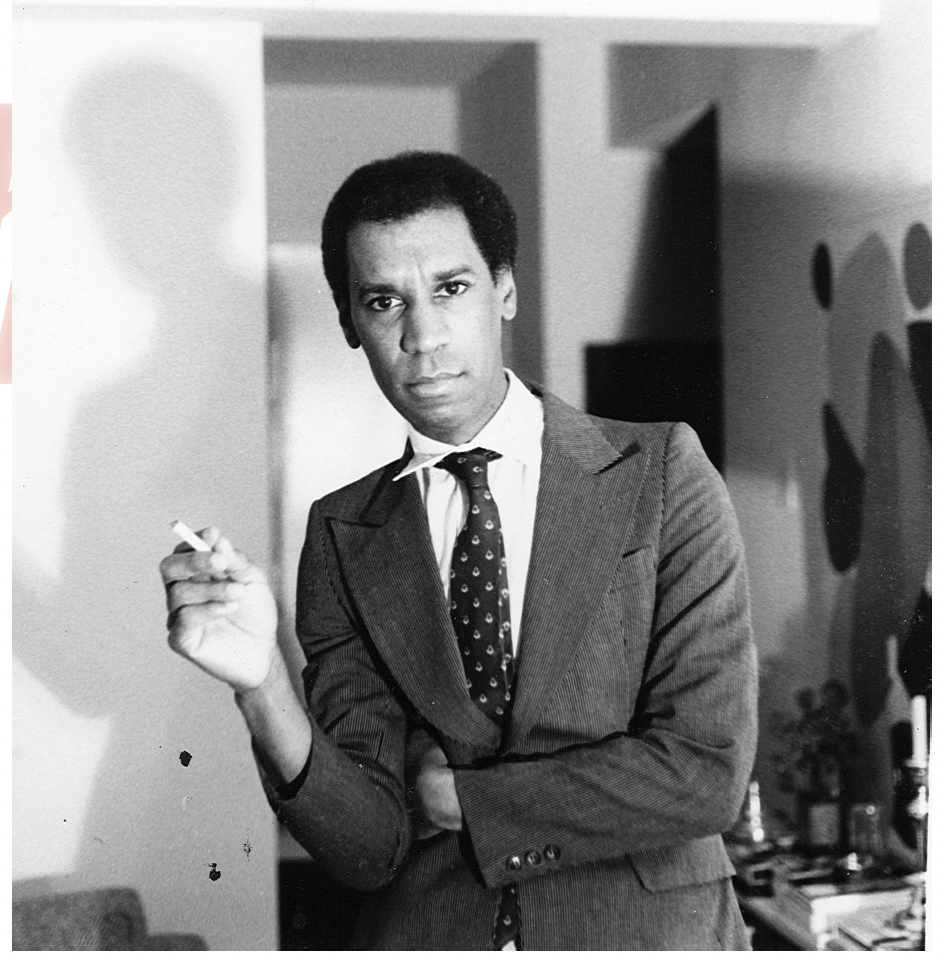
Estate of Carroll Sockwell, courtesy of Micah Salb and Washington Color Gallery
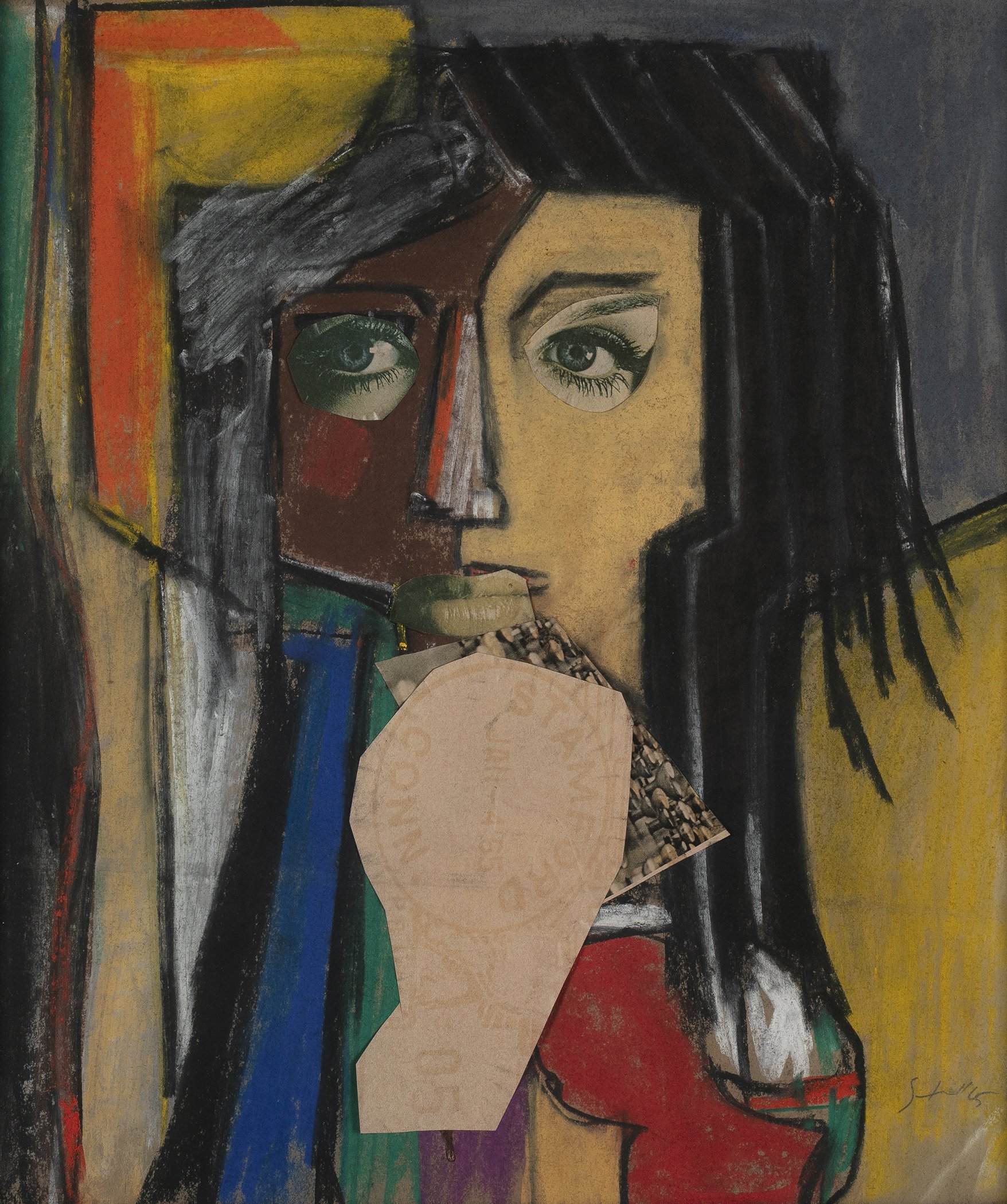
untitled, Woman, 1965
mixed media collage
18 x 16 inches
signed and dated
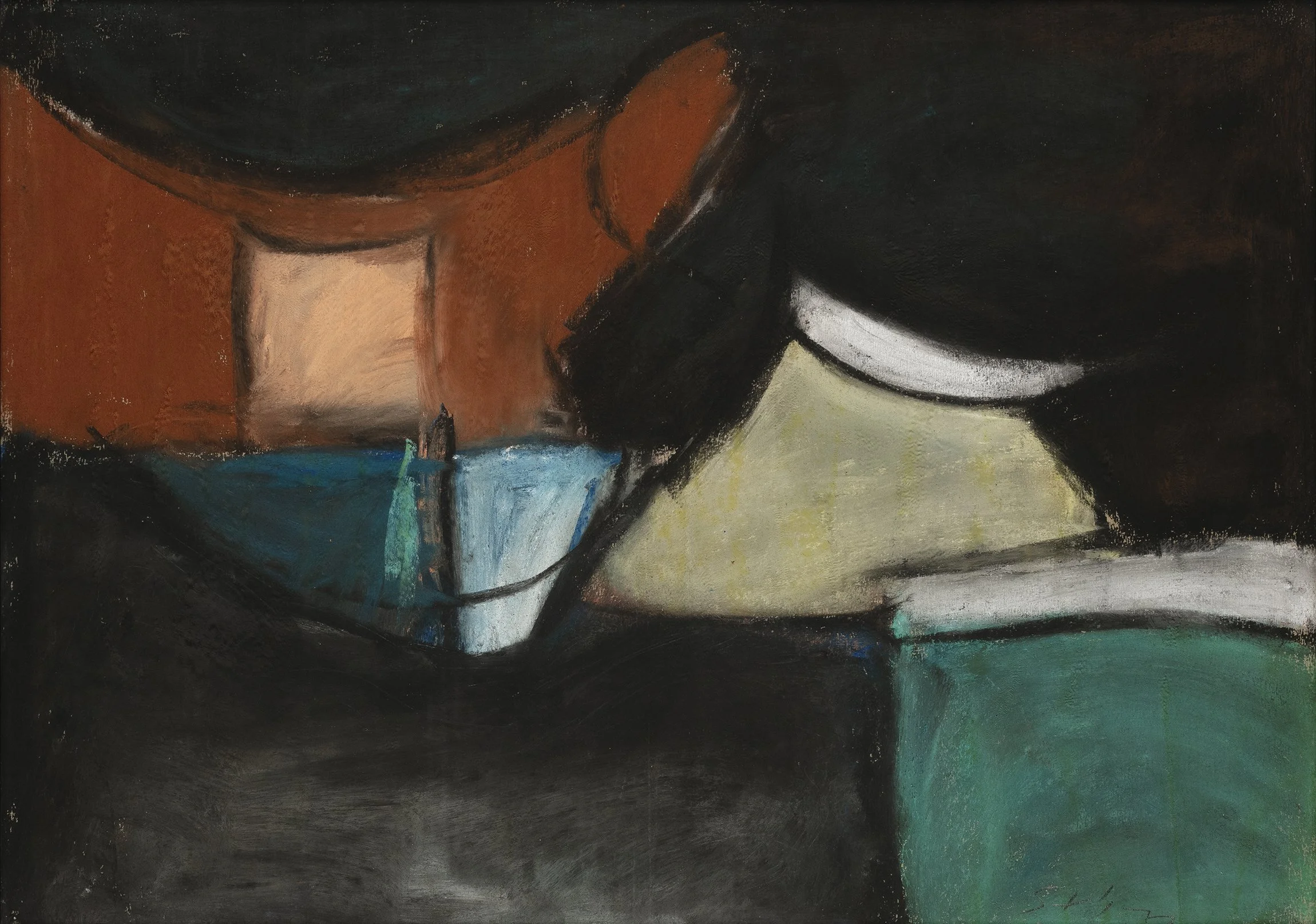
untitled, abstract still life, 1977
mixed media on paper
22 x 30 inches
signed and dated
Selected Exhibitions
Margaret Dickey Gallery, Washington, DC, 1963
Exhibition of Graphic Arts; Barnett Aden Gallery, Washington, DC, 1964
Tarot Gallery, NYC, 1966
Twelve Afro-American Artists; Lee Nordness Galleries, NYC, and the Smithsonian Institution, sponsored by the NAACP (with Arthur Coppedge, Felrath Hines, Norman Lewis, Charles McGee, Noah Purifoy, Arthur Smith, James L. Tanner, Alma Thomas, Russ Thompson, Jack White, Walter Williams), 1969
The Washington Painters: 17 Artists from the Capital Area; Ringling Museum of Art, Sarasota, Florida, 1969
Jefferson Place Gallery, Washington, DC, 1971 (highlighting Sockwell’s Mirror Compositions),
The Deluxe Show; Deluxe Art Center, Houston, TX, 1972
Washington Color School Paintings; Corcoran Gallery of Art, Washington, DC, 1973
Carroll Sockwell: Work From Five Decades; Washington Project for the Arts, Washington, DC, 1992
Selections from the Estate of Carroll Sockwell; Mather Gallery, Case Western Reserve University, Cleveland, OH, 1999 (curated by James F. Hilleary)
Afro-American Images 1971: The Vision of Percy Ricks; Delaware Art Museum (Sockwell’s work illustrated in the catalog), DE, 2021