Ed Dwight (b. 1933)
Born in Kansas City, Kansas in 1933, Ed Dwight has led a career defined by both historic firsts and a sustained commitment to visualizing African American history. The son of Edward Dwight Sr., a professional baseball player in the Negro Leagues, Dwight was raised in an environment that valued discipline, ambition, and achievement. Though initially awarded a scholarship to attend the Kansas City Art Institute, he chose instead to pursue engineering, a decision that led him to enlist in the United States Air Force. There, he distinguished himself as a test pilot and, in the early 1960s, was selected by the Kennedy administration as the first African American astronaut trainee. Despite this groundbreaking appointment, he was not admitted into NASA’s astronaut corps, and in 1966 he resigned from the Air Force amid the racial tensions of the era.
This pivotal moment marked a profound redirection in Dwight’s life. Turning fully to art, he enrolled at the University of Denver, where he studied sculpture and mastered the technical demands of metal casting. From this point forward, Dwight developed a practice centered on large-scale bronze sculpture, using the medium to recover and monumentalize overlooked narratives within American history.
His breakthrough came with the commission for Black Frontier Spirit in the American West, a series of bronze sculptures which brought forward the often-unacknowledged contributions of African Americans to westward expansion. Supported by the National Park Service, the series traveled extensively, establishing Dwight as a leading interpreter of historical memory through sculpture. He continued this trajectory with The Evolution of Jazz, an ambitious body of work comprising over seventy sculptures that trace the development of jazz as both a musical form and a cultural force, presented in exhibitions that toured nationally for several years.
Across his oeuvre, Dwight’s work is characterized by its narrative clarity, dynamic figuration, and commitment to commemoration. His sculptures often function as both historical record and public monument, bridging the gap between education and artistic expression. Over the course of his career, he has produced more than 100 public memorials and thousands of gallery works, ranging from intimate studies to monumental installations. He continues to operate a large studio, gallery, and foundry in Denver, where he remains an active and prolific presence.
In 2024, Dwight rocketed into space, flying with Blue Origin and becoming the oldest man in space.
“Dwight, now 90, went through a few minutes of weightlessness with five other passengers aboard the Blue Origin capsule as it skimmed space on a roughly 10-minute flight. He called it “a life-changing experience.”
“I thought I really didn’t need this in my life,” Dwight said shortly after exiting the capsule. ”But, now, I need it in my life .... I am ecstatic.””
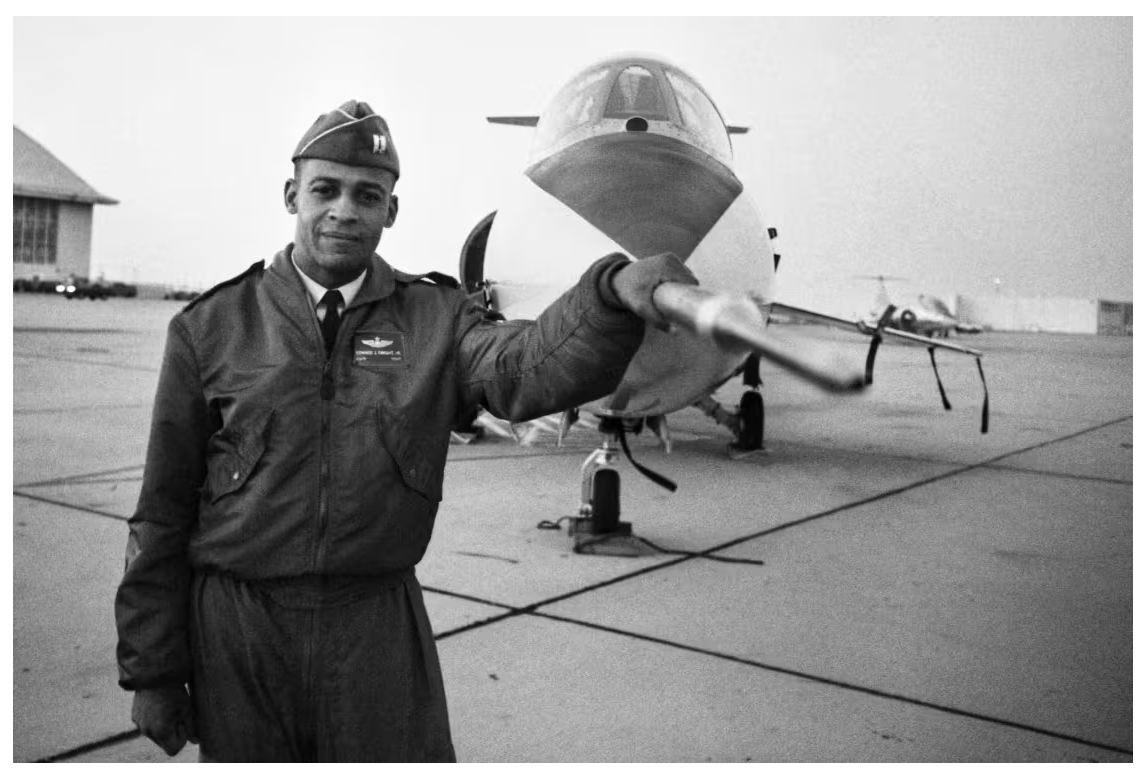
Capt. Ed Dwight stands in front of an F-104 fighter jet in 1963. (Bettman Archive)
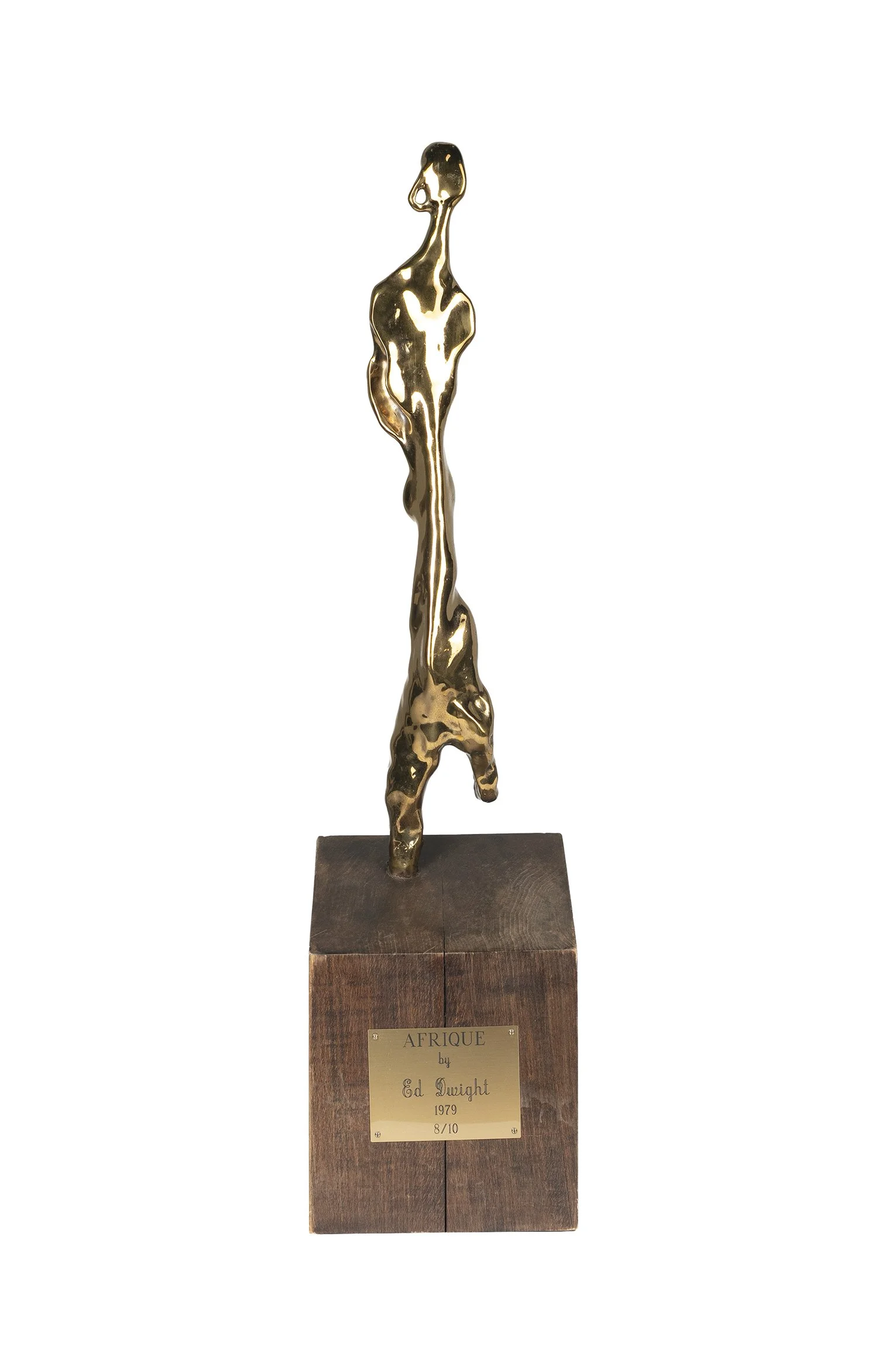
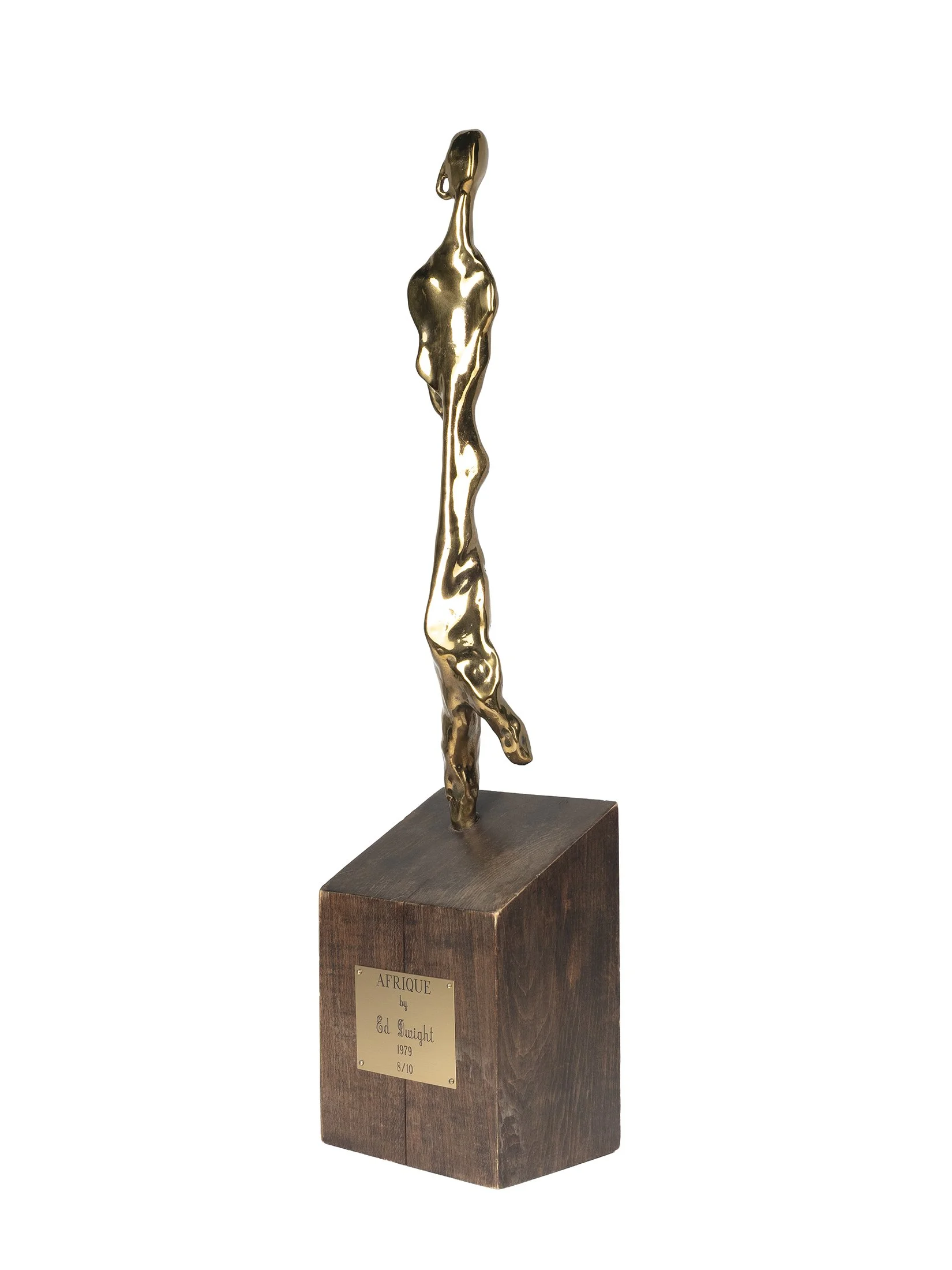
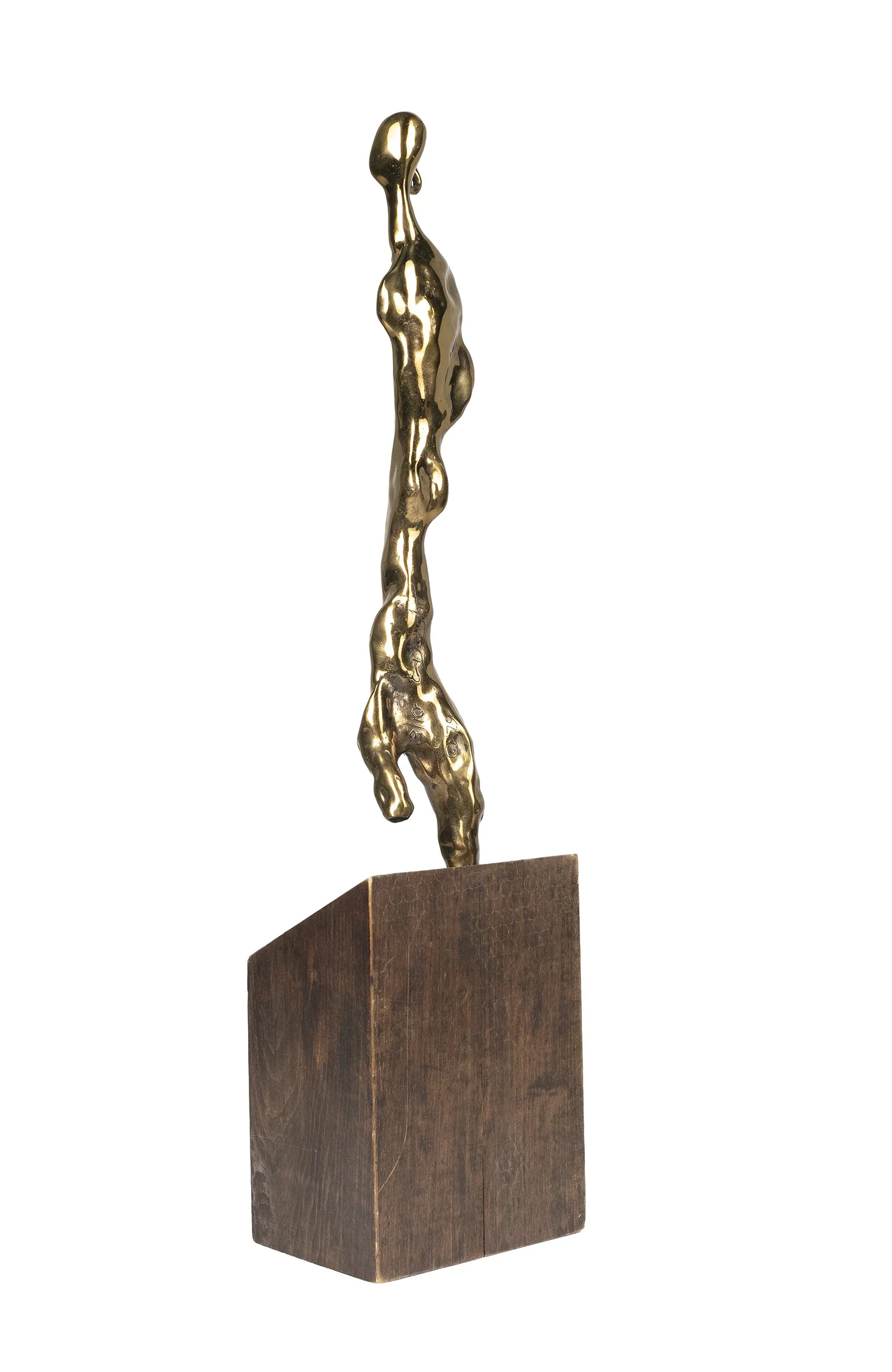
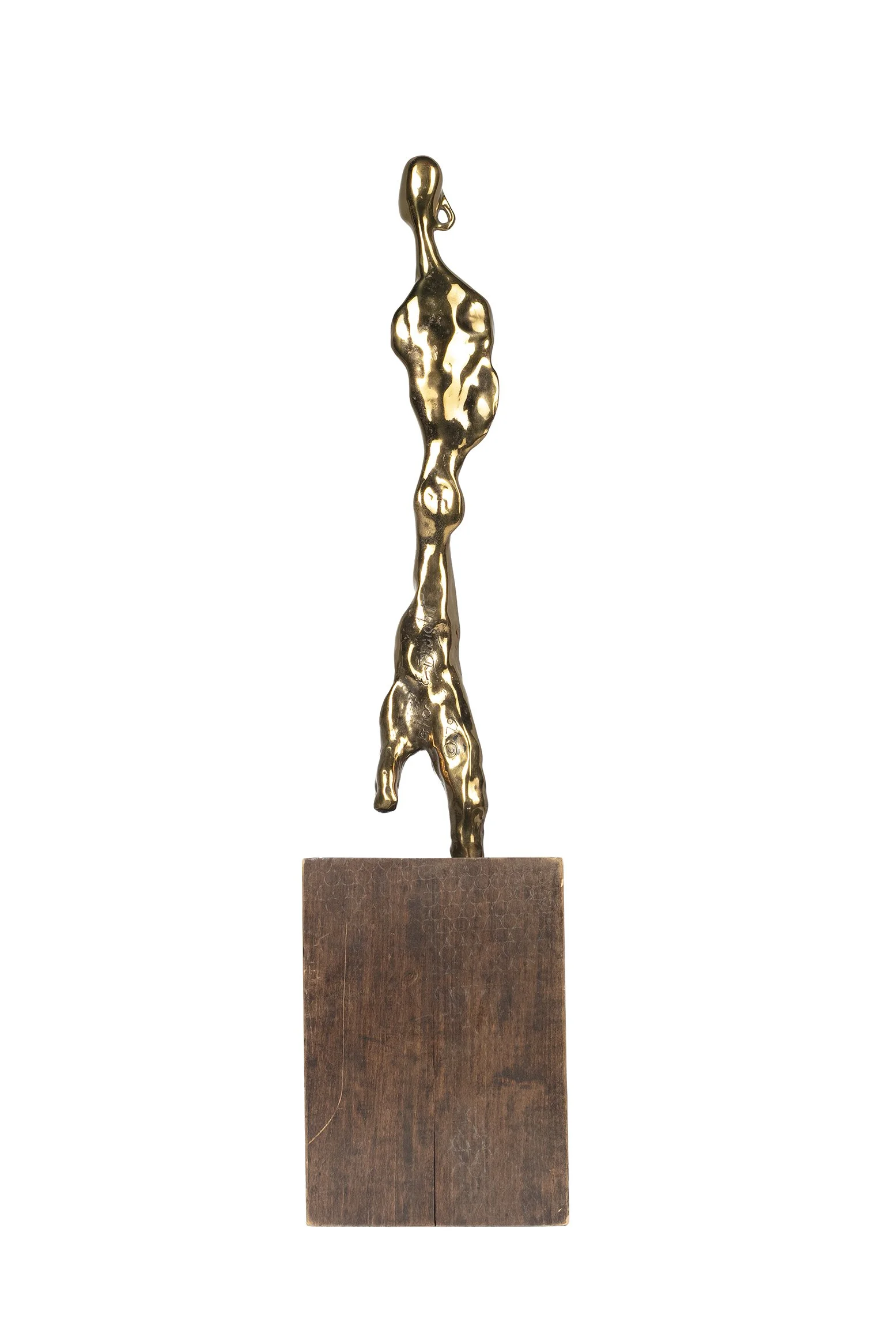
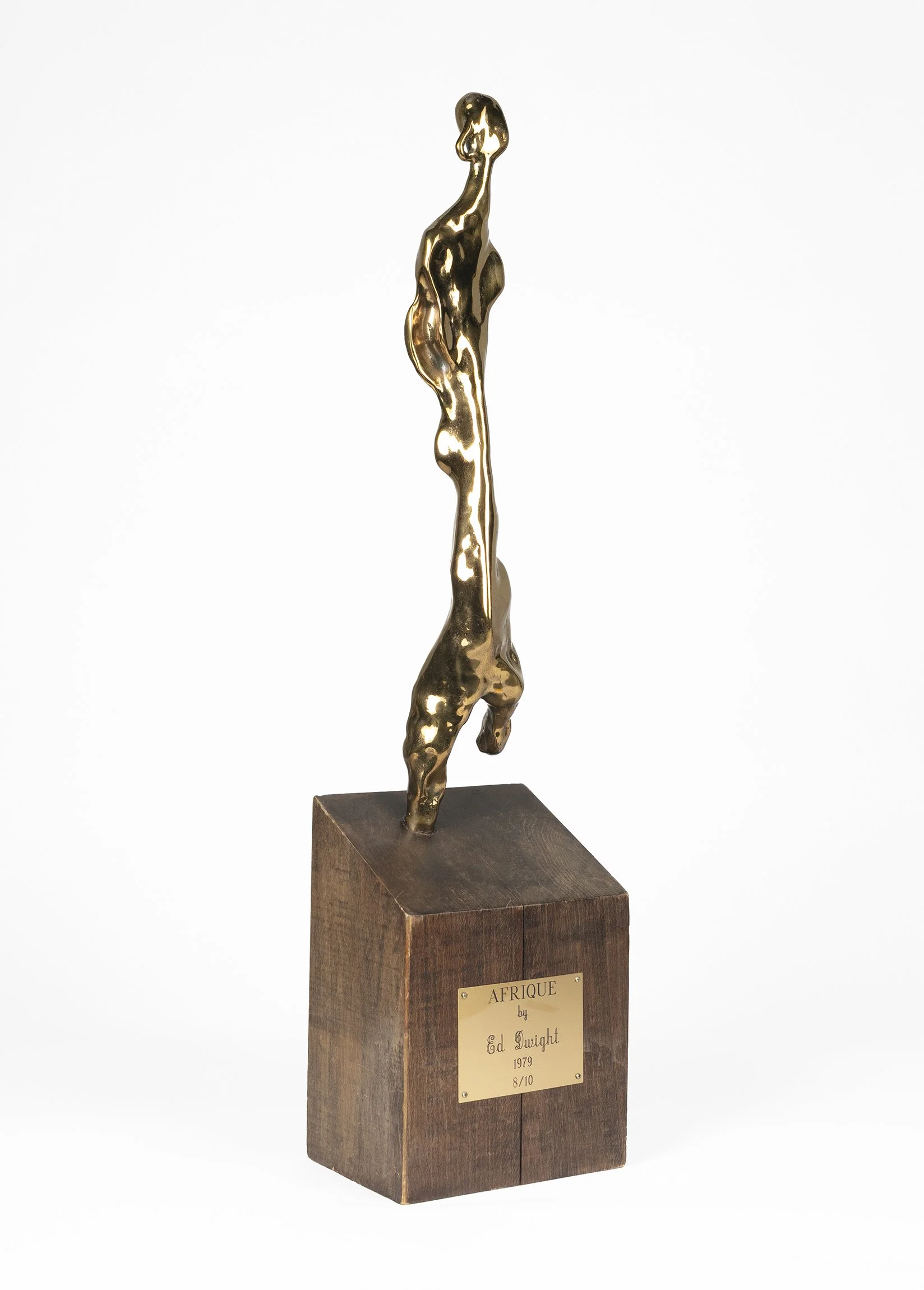
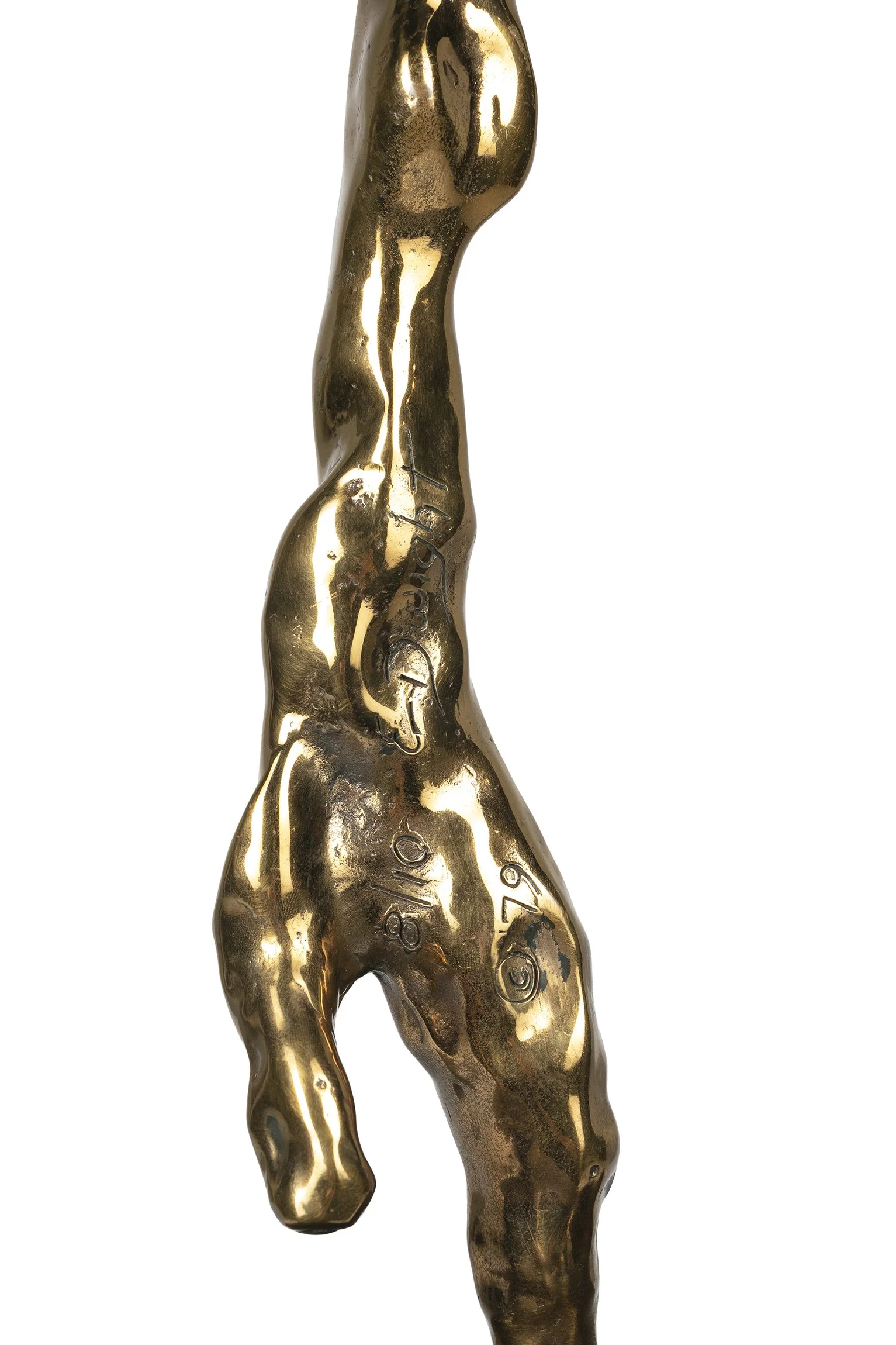
Afrique, 1979, bronze, 21 x 3-1/2 x 2-1/2 inches (image), (base 10 x 5-1/2 x 7 inches), signed, dated, and numbered 8/10.