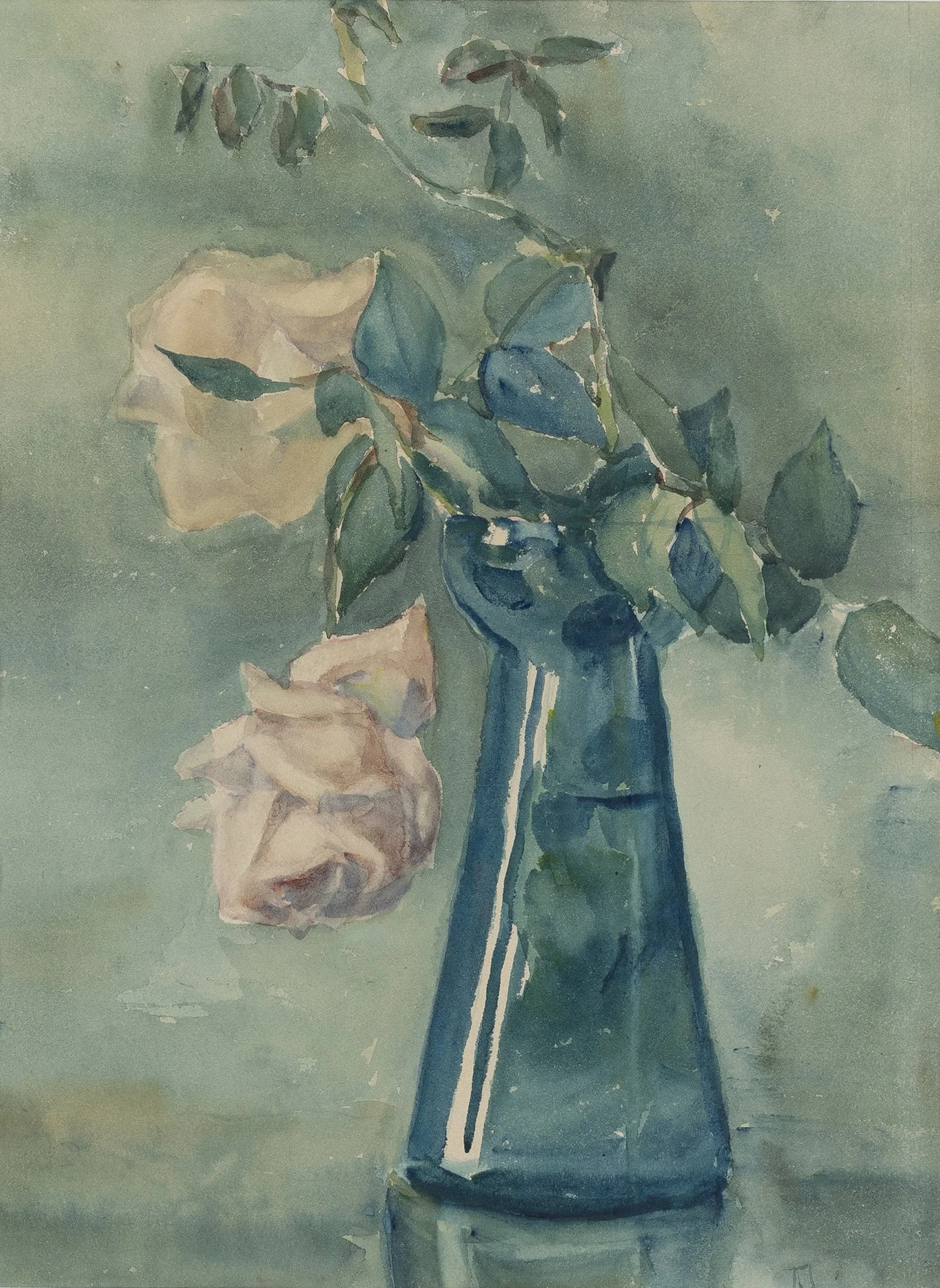
James Porter (1905-1970)
Recognized as the foundational figure in the study of African American art, James A. Porter was both a practicing artist and the first scholar to produce a sustained, critical history of Black artistic achievement in the United States. Born in Baltimore, Maryland in 1905, Porter entered Howard University on an art scholarship, where he studied painting, drawing, and art history under James V. Herring. Following his graduation, he joined the faculty, beginning a distinguished career at Howard that would span more than four decades. Over the course of his tenure, he served not only as an instructor but also as head of the art department and director of the university’s gallery, where he organized exhibitions that brought greater visibility to both African American artists and broader artistic dialogues, while significantly expanding the institution’s permanent collection.
Porter’s commitment to scholarship developed alongside his artistic practice. He continued his studies at Teachers College, Columbia University (1927–1928), and at the Art Students League of New York under Dimitri Romanovsky and George Bridgman in 1929. Early recognition followed, including an Honorable Mention from the Harmon Foundation and the Schomburg Portrait Prize in 1933 for Woman Holding a Jug. In 1935, he traveled to Paris to study medieval archaeology at the Sorbonne, followed by extensive study tours through Belgium, the Netherlands, Italy, and Germany, where he deepened his understanding of both European painting and African art traditions. He completed his M.A. in art history at New York University in 1937.
It was during this period that Porter produced his most enduring scholarly contribution: Modern Negro Art, a groundbreaking text that systematically documented the achievements of African American artists from the eighteenth century onward. Widely regarded as the first comprehensive study of its kind, the book established a critical framework that continues to shape the field. Porter further expanded this work through essays such as The Negro Artist and Racial Bias (1936), Robert S. Duncanson, Midwestern Romantic Realist (1951), and Ten African American Artists of the 19th Century, and through contributions to publications including Art in America and Art Quarterly.
Porter’s scholarship was deeply informed by firsthand engagement with global artistic traditions. With support from the Rockefeller Foundation, he traveled to Cuba and Haiti between 1945 and 1946, studying local artistic practices and cultural institutions. Later, in 1963–64, he undertook extensive travel in West Africa, Nigeria, and Egypt, followed by research in Brazil, where he investigated the influence of African culture on Latin American art and architecture. These experiences enriched both his teaching and his research, forming the basis of courses at Howard that expanded the study of African and diasporic art well beyond traditional academic boundaries.
Although best known for his scholarship, Porter remained an active painter throughout his life, producing works that reflect a careful attention to form, structure, and subject. His dual role as artist and historian enabled him to approach African American art not only as an academic discipline but also as a living, evolving practice grounded in both historical continuity and contemporary expression.
Porter died in 1970, leaving behind a legacy that continues to shape the study and interpretation of African American art. In recognition of his contributions, the James A. Porter Gallery of African-American Art was established at Howard University. His enduring influence was further honored in the exhibition James A. Porter: Artist and Art Historian—The Memory of His Legacy (1992), which reaffirmed his central role in defining the field he helped to create.
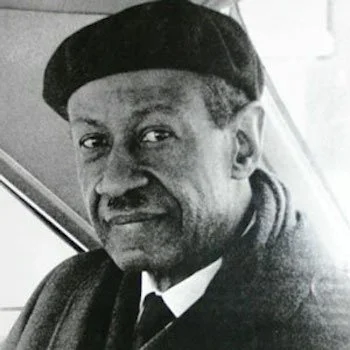
Roses in a Vase, c. 1940-1950
watercolor on paper
16 x 10 inches
signed with conjoined initials, JAP
Selected Exhibitions
Harmon Foundation, NY, 1928-30, 1933, 1935
Howard University Gallery of Art, Washington, DC, 1930, 1959, 1992
Paintings and Drawings by James A Porter and Block Prints by James Lesesne Wells, Montclair YMCA, NJ, 1930
Hampton Institute Library, Hampton, VA, 1932
Exhibition of the Art of the American Negro (1851-1940), Tanner Art Galleries, Chicago, IL, 1940
The Negro Artist Comes of Age: A National Survey of Contemporary American Artists, Albany Institute of History and Art, NY, 1945
Barnett Aden Gallery, Washington, DC, 1948
JAMES A. PORTER Retrospective Exhibition: Paintings of the Years 1954-1964, Howard University Gallery of Art, Washington, DC, 1965
Afro-American Artists, 1800-1969, School District and Museum of the Philadelphia Civic Center, PA, 1969
Two Centuries of Black American Art, Los Angeles County Museum of Art, CA, 1976
Narratives of African American Art and Identity: The David C. Driskell Collection, University of Maryland Art Gallery, College Park, 1998
The Great Migration: The Evolution of African American Art, 1790-1945, Taft Museum of Art, Cincinnati, OH, 2000
African American Art: Harlem Renaissance, Civil Rights Era and Beyond, American Art Museum, Smithsonian Institution, Washington, DC, 2012