Loïs Mailou Jones (1905-1998)
Lois Mailou Jones was raised in Boston by working-class parents who instilled in her the values of education, discipline, and hard work. After graduating from the School of the Museum of Fine Arts, she began her career designing textiles for New York firms. In 1928, she pivoted toward education, accepting a teaching position at Palmer Memorial Institute in North Carolina.
At Palmer, Jones founded the art department, coached the basketball team, taught folk dance, and played piano at Sunday services—reflecting both her versatility and dedication to community. Just two years later, she was invited to join the art department at Howard University in Washington, D.C., where she would go on to teach from 1930 to 1977, shaping generations of African American artists, including David Driskell, Elizabeth Catlett, and Sylvia Snowden.
As her teaching career flourished, so too did her artistic practice. A pivotal sabbatical in Paris exposed her to African tribal art, a popular subject in French galleries at the time, which she began incorporating into her own work. The city offered a kind of creative and social freedom she had never experienced, an environment where race seemed irrelevant.
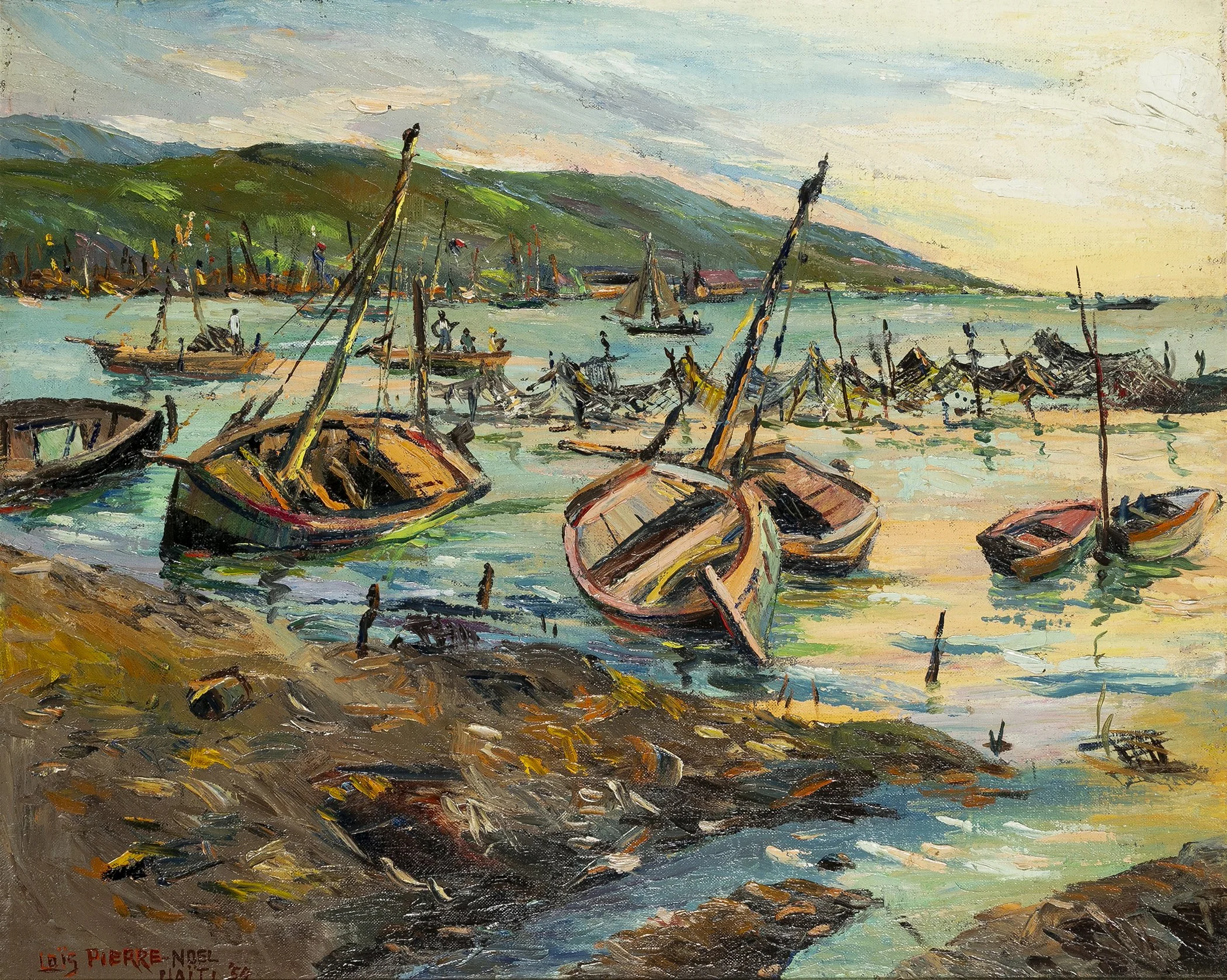
In 1953, she married Haitian graphic designer Louis Vergniaud Pierre-Noël. Their annual trips to Haiti further influenced her palette and patterning, as she absorbed the vibrant colors and dynamic forms of Haitian art.
In 1970, Jones was commissioned by the U.S. Information Agency to serve as a cultural ambassador to Africa. She visited 11 countries, delivering lectures, engaging with artists, and touring museums. These experiences deeply informed the African-inspired themes of her later work, especially the paintings she produced between 1971 and 1989.
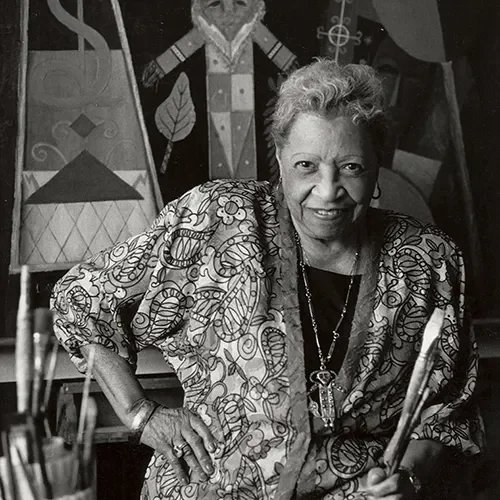
Photo courtesy of the Lois Mailou Jones Pierre-Noël Trust, Washington, DC
Haiti, 1954
oil on board
21-1/2 × 26 inches
signed, Lois Pierre-Noel
dated
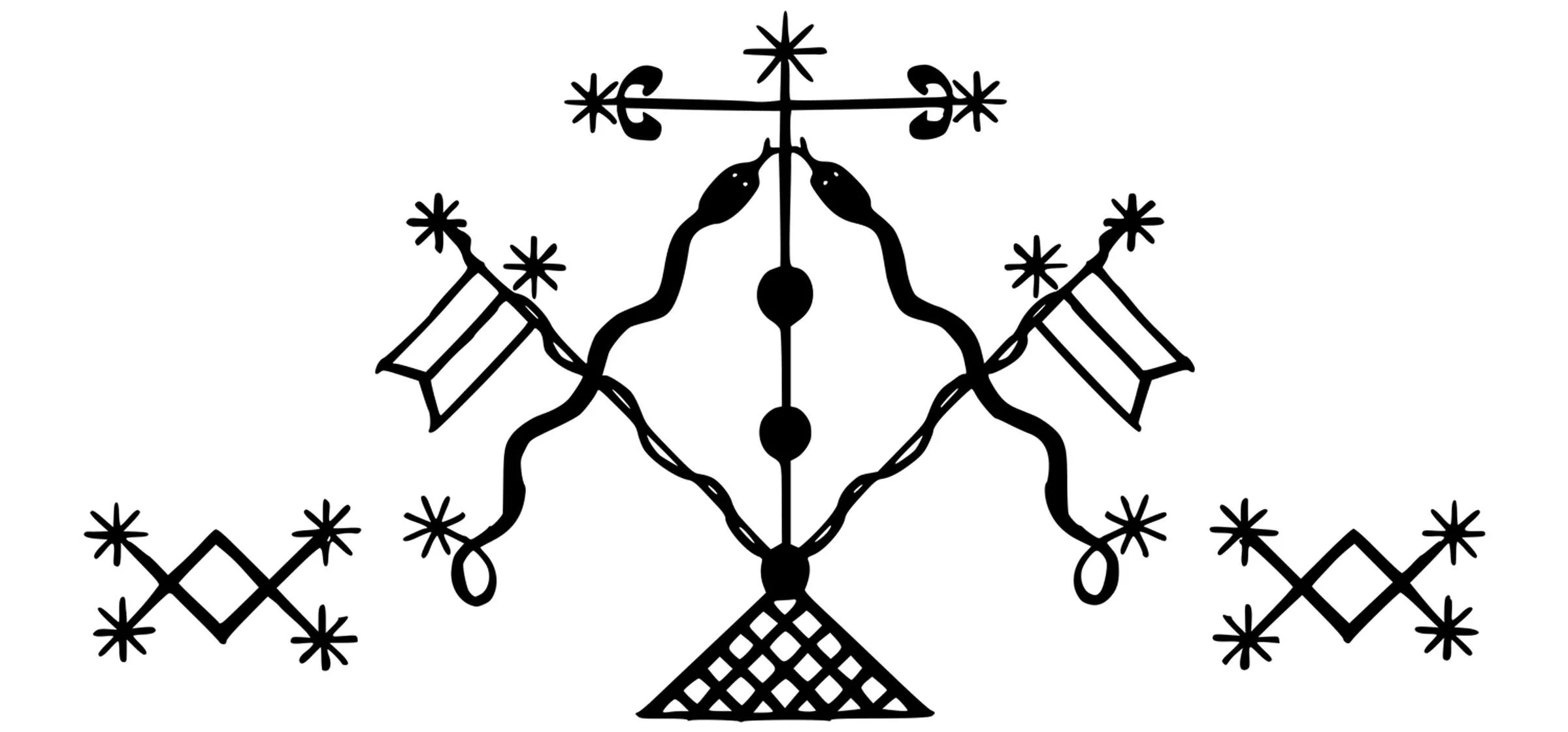
Jones’s first trip to Haiti in 1954 marked a profound turning point in her artistic development, catalyzing a shift toward a more vibrant palette and an expanded engagement with African diasporic visual languages. Returning regularly over the following decades, she immersed herself in Haitian culture, drawing inspiration from Vodou symbolism, ceremonial vevé designs, and the rhythms of everyday life in market scenes, landscapes, and architectural forms rendered in increasingly bold, saturated color. Haiti offered Jones a sense of cultural continuity, where African-derived traditions remained visibly embedded in contemporary life, reinforcing connections she had long explored between African art and modern design.
untitled, (Clothes on the Line), 1940
watercolor on paper
14 x 19 inches
signed
untitled, (Boats and Houses), 1944
watercolor on paper
11-1/2 x 15-1/2 inches
signed and dated
Selected Exhibitions
Howard University Gallery of Art, Washington, DC, 1937
Vose Galleries, Boston, MA, 1939
Morgan State College, Boston, MA, 1940
Howard University Gallery of Art, Washington, DC, 1948
Hampton Institute, VA, 1949
Galerie Soulanges, Paris, FR, 1966
Paintings - Haiti-Paris by Lois Mailou Jones; Galerie Internationale, NY, 1968
LOIS MAILOU JONES: Retrospective exhibition, Forty Years of Painting, 1932-1972; Howard University Gallery of Art, Washington, DC, 1972
Acts of Art, Inc, NY, 1973
Reflective Moments: LOIS MAILOU JONES, Retrospective 1930-1972; Museum of the National Center of Afro-American Artists, Boston, MA, 1973.
Musée d'art haïtien du Collège Saint-Pierre, Haiti, 1986
LOIS MAILOU JONES: A Life in Vibrant Color, Mint Museum of Art, Charlotte, NC, 2010
Full Spectrum: The Prolific Master within LOIS MAILOU JONES; D.C. Commission on the Arts, 2014
Black Refractions: Highlights from the Studio Museum in Harlem, NY, 2019-2021
Veve Voudou III, 1997
color screenprint on paper
32 × 40 inches (full margins)
signed, titled, dated, and numbered 57/150
In this composition, Loïs Mailou Jones draws directly on the visual language of vevé, integrating Vodou symbolism into a structured, modernist design. Rather than presenting a literal ceremonial diagram, she disperses vevé-like elements across the surface, allowing them to organize the composition both visually and symbolically.
At left, the undulating green serpentine form strongly recalls vevé associated with Damballah, the serpent spirit, whose presence is often signaled through continuous, looping lines. Along the central red column, Jones incorporates repeating circular and cross-like emblems, echoing the modular geometry of vevé designs, where symmetry and repetition reinforce spiritual invocation.
The suspended central figure, rendered with a mask-like face and flattened, patterned body, appears within this symbolic framework as both participant and icon, positioned as if within a ritual field. Surrounding vegetal forms and patterned borders further extend this visual language, suggesting the permeability between the spiritual and natural worlds that vevé traditionally mediate.
What distinguishes Jones’s approach is her transformation of these sacred signs into a cohesive modernist composition. The vevé are not isolated references but are fully embedded into the painting’s formal logic, governing balance, rhythm, and spatial organization. In this way, Jones translates Vodou’s ritual geometry into a contemporary pictorial system, asserting the continuity between African diasporic spiritual traditions and twentieth-century abstraction.