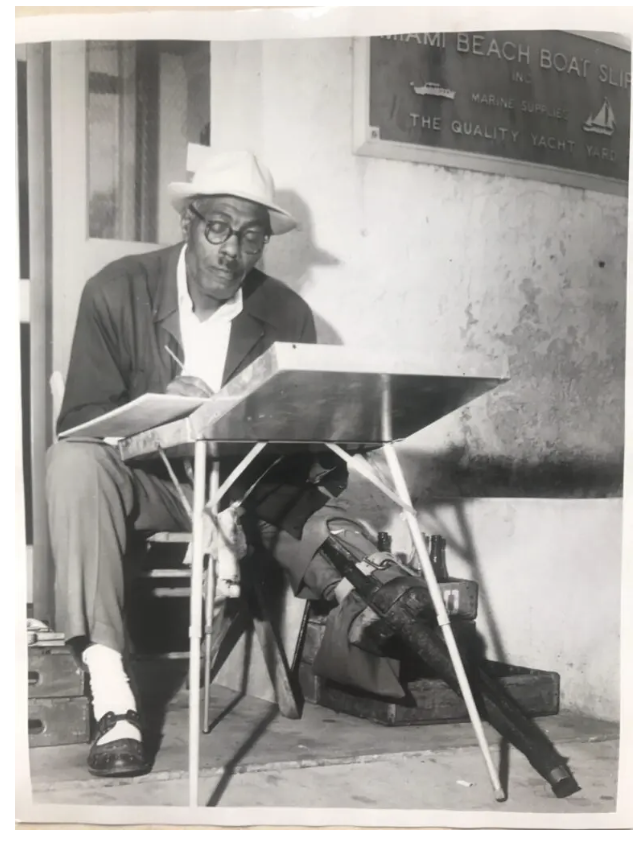
Joe Selby
(1893-1960)
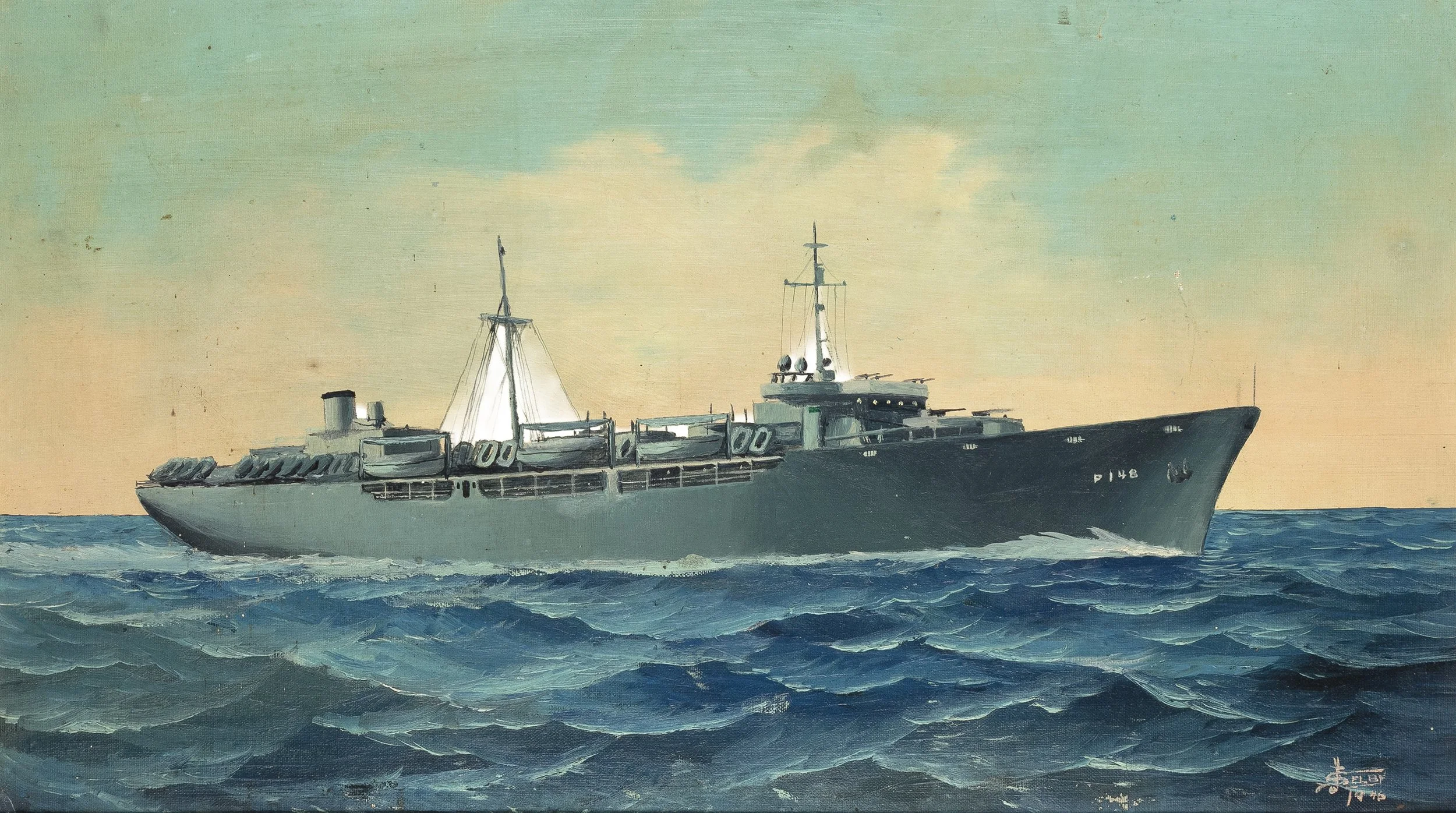
Born in Mobile, Alabama, Joe Selby developed a highly specialized and self-directed career as a painter of maritime subjects, working primarily in Miami, Florida from the 1920s through the 1950s. As a young boy, Selby worked as a deckhand on tugboats, gaining firsthand familiarity with the mechanics and structure of vessels, knowledge that would later inform the precision of his paintings. A life-altering accident in 1905, when his leg was severely injured, brought an abrupt end to his seafaring work and prompted a decisive turn toward art.
Selby’s practice emerged from this intimate connection to maritime life. Initially working along the Chesapeake Bay in Baltimore during the 1920s and 1930s, he developed a methodical approach to painting ship portraits, combining careful observation with technical accuracy. After relocating to Miami, he became a familiar figure along the city’s piers, where he would approach yacht owners to solicit commissions. Upon securing a client, Selby boarded the vessel to record measurements and details, later returning to a nearby fire station where he maintained a workspace and completed the painting. His works, often characterized by crisp draftsmanship and a clear, descriptive handling of form, reflect both his practical knowledge of ships and a commitment to faithful representation.
Over time, Selby attracted an elite clientele, producing portraits for prominent industrialists and members of influential American families, including Alfred P. Sloan and Charles F. Kettering, as well as patrons associated with the Morgan and Rockefeller families. Despite this success, he lived much of his life modestly in Miami’s Overtown neighborhood, later building his own home.
Selby continued to paint into the late 1950s, with his last dated work from 1959. Today, his paintings are held in institutional collections such as the Chesapeake Bay Maritime Museum and are valued for their combination of technical clarity, firsthand knowledge, and their documentation of a mid-century maritime culture shaped by both labor and leisure.
untitled, 1946
oil on board
14 x 24 inches
signed