Samuel Joseph Brown (1907-1994)
Samuel Joseph Brown was an American watercolorist, printmaker, and educator whose work offers a nuanced and deeply human portrayal of everyday life, particularly within African American communities. Born in Wilmington, Brown moved with his family to Philadelphia in 1917, where he would spend the majority of his life and career. He demonstrated artistic talent at an early age and went on to study at the Pennsylvania Museum and School of Industrial Art (now the University of the Arts), later earning an advanced degree from the University of Pennsylvania. Brown shared a studio with Dox Thrash at the beginning of their careers, (1920-1950s, and the two operated a sign-painting business to make ends meet.
Brown emerged during the 1930s as part of a generation of artists supported by federal art programs during the Great Depression. He holds the distinction of being the first African American artist selected for the Public Works of Art Project, a precursor to the Works Progress Administration’s Federal Art Project. Within these programs, Brown worked primarily in watercolor and printmaking, producing scenes that captured both the dignity and complexity of everyday life.
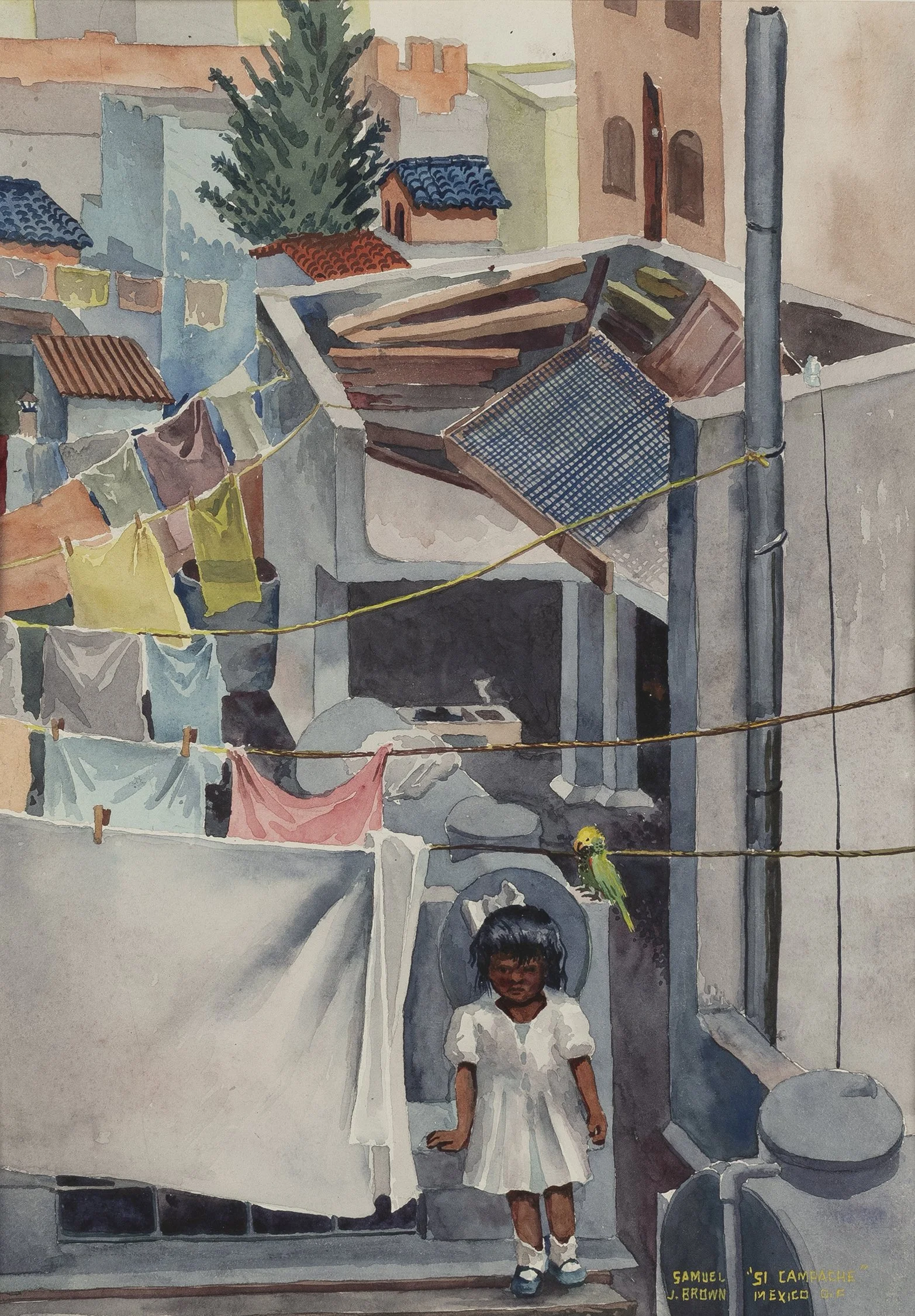
Travel played a meaningful role in Brown’s artistic development. In 1945, he visited Mexico as part of a goodwill tour, an experience that expanded his visual vocabulary and introduced new architectural forms, spatial relationships, and color sensibilities into his work. Paintings from this period, including the present watercolor, reflect a heightened attention to vernacular structures and the rhythms of daily life, laundry lines, clustered buildings, and intimate human presence rendered in saturated, luminous watercolors. These works demonstrate Brown’s ability to translate observed environments into carefully balanced compositions in which structure and spontaneity coexist.
A committed educator, Brown taught for more than three decades in the Philadelphia public school system, shaping generations of students while maintaining an active studio practice. His work was widely exhibited and collected, with paintings now held in major institutions including the Philadelphia Museum of Art, the National Gallery of Art, and the Museum of Modern Art.
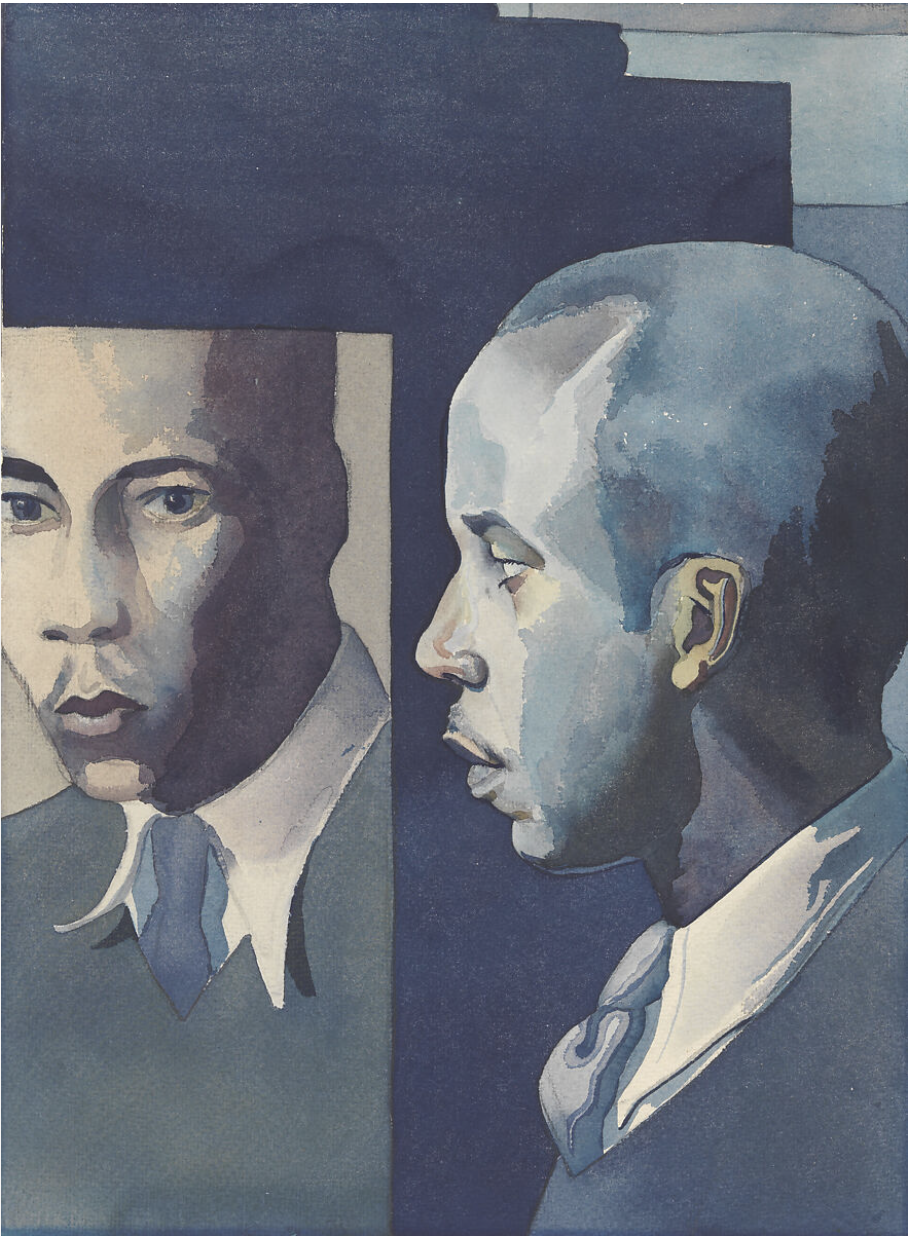
Self Portrait, c. 1941; watercolor and graphite on paper; Collection of the Metropolitan Museum of Art, NY.
Si Campache, Mexico DF, c. 1945
watercolor on paper
13-1/2 x 9-1/2 inches
signed and titled
DF stands for Distrito Federal,
now known as Ciudad de México.
Selected Exhibitions
Harmon Foundation, NY, 1933. 1935
New Horizons in American Art, Museum of Modern Art, NY, 1936
Contemporary Negro Art, Baltimore Museum of Art, MD, 1939
American Negro Art, 19th and 20th Centuries, Downtown Galleries, NY, 1942
Philadelphia Art Alliance, PA, 1946
Exhibition of Graphic Arts and Drawings by Negro Artists, Howard University Gallery of Art, Washington, DC, 1947
Salute to the Barnett Aden Gallery, Murphy Fine Arts Center, Morgan State College, Baltimore, MD, 1968
Afro-American Artists, 1800-1969, School District and Museum of the Philadelphia Civic Center, PA, 1969
Samuel Brown: A Retrospective; Balch Institute for Ethnic Studies, Philadelphia, PA, 1983
A Retrospective Exhibition of Paintings by SAMUEL J. BROWN; Delta Arts Center, Winston-Salem, NC, 1985
Unbroken Circle: Exhibition of African American Artists of the 1930's and 1940's, Kenkeleba House, NY, 1986
Black Printmakers and the WPA; Lehman College Art Gallery, CUNY, 1989
Art in a Day's Work: Prints from the WPA; Baltimore Museum of Art, MD, 2000
Challenge of the Modern: African American Artists, 1925-1946; Studio Museum in Harlem, NY, 2003
The Harlem Renaissance and Transatlantic Modernism, Metropolitan Museum of Art. NY, 2024